
-
before cleaning

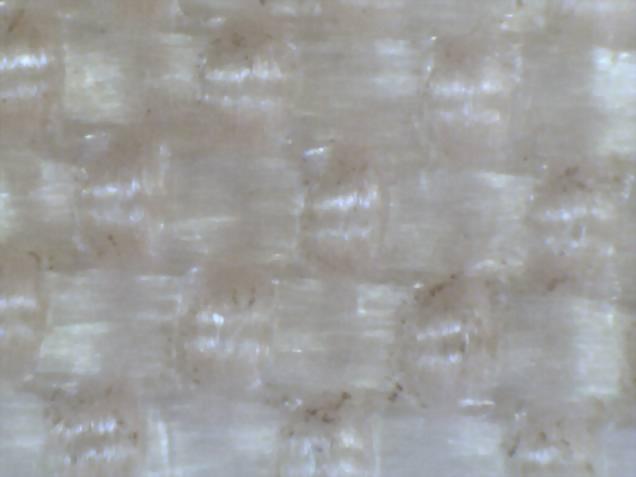
If you zoom in, there are many black particles attached to the surface of the Teflon braid.


On the back of the Teflon braid, many black particles are also attached to the surface.

From the structure of the braided belt, it can be seen that many filaments are tied into a bundle, and bundles of polyfilaments are woven into a belt. Therefore, if the dirt has penetrated into the filament fiber, it cannot be effectively cleaned. However, if it has penetrated into the filament fiber, it will not cause the screw to be dirty due to reverse pollution. Therefore, after judging, if the surface particle can be cleaned, the purpose of cleaning can be achieved.
-
Use nitric acid, phosphoric acid, hydrochloric acid, heat soak, and can not be effectively dissolved, indicating that the attachment may not be metal.
-
Soaked with a copper oxide wipe and did not dissolve effectively. However, when brushing with a toothbrush, the color of the black pollutant deposition line becomes significantly lighter, indicating that the deposit may be a metal oxide.

-
Soak it in PTC05, a fine-dust cleaning agent, and then brush it with a toothbrush. The color of the black pollutant deposition line will be significantly lighter, and the effect is more significant than that of copper oxide wiper. It shows that in addition to metal oxides, there are organic particles in the attachment, and the organic particles account for a higher proportion of pollutants. Microdust cleaner PTC05 should be a good cleaner.

-
Suggested cleaning process: soak for 30 minutes at 70°C with microdust cleaner PTC05. Then scrub with a brush. Or use an automatic brushing machine, put the braided belt into the roller, and use the roller brush to scrub directly in the detergent.

The right side of the braided belt in the above picture is soaked in the dust cleaning agent PTC05 at 70°C for 30 minutes. Then scrub with a toothbrush. The color of the black pollutant deposition line is significantly lighter than that on the left without cleaning. The photomicrographs also showed that surface contamination was minimal.