-
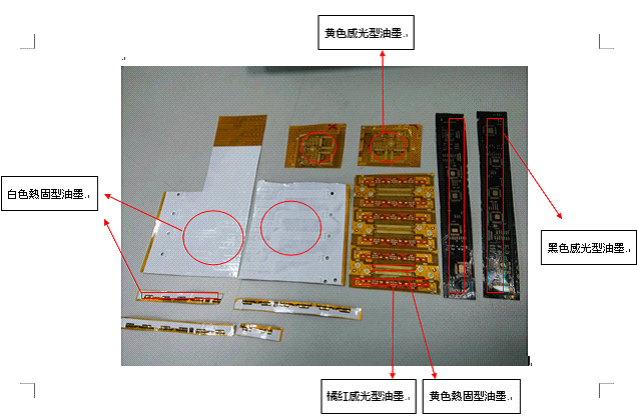
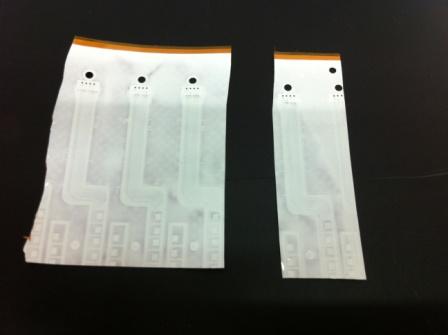
The customer sent a sample, explaining the part to be removed.
-
Before washing. Because the sample is limited, cut it with scissors and test it several times.
-
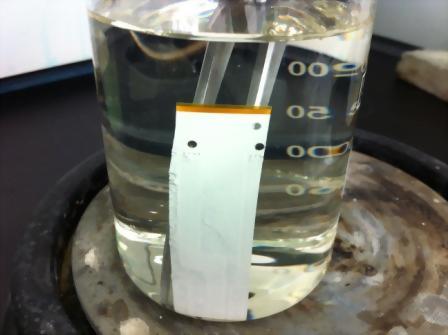
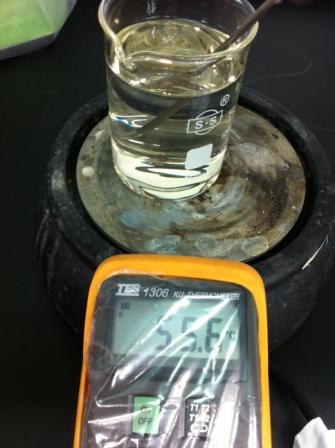
Soak test with ACHM01-B agent. ACHM01-B is pre-added with 20% water and heated to 55°C. Put in the sample to be tested.
-
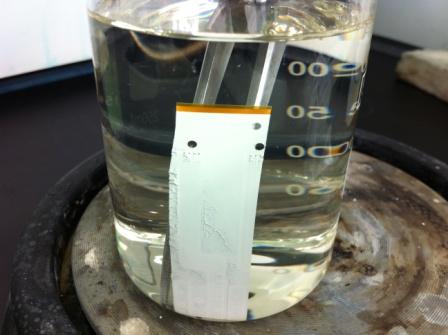
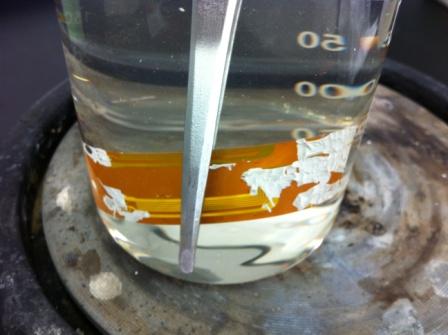
After washing for 1 minute, it can be seen that the ink has begun to swell.
-
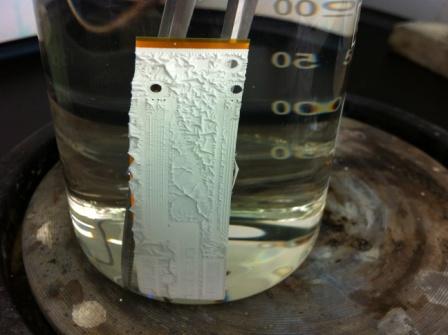
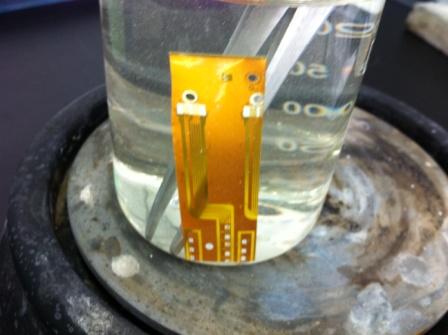
After 5 minutes of washing, it can be seen that most of the ink has started to come off. However, after clamping and shaking, it was found that a small amount of ink remained stubbornly in a small area.
-
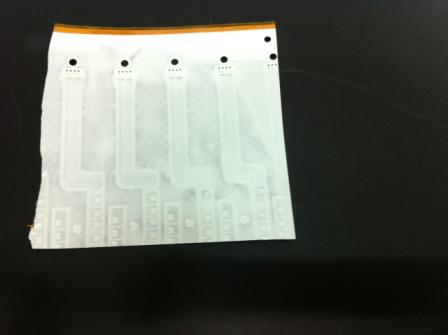
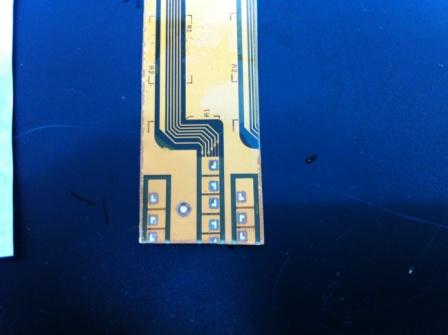
After 10 minutes of cleaning, take it out and rinse it with clean water, only to see that all the ink (heat-setting type) has come off.

-
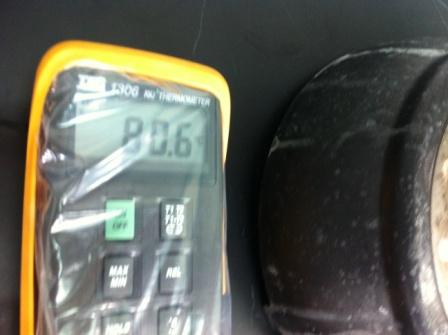
Cut out another piece of sample. Heat the ACHM01-B formulation to 80°C. Put in the sample to be tested.
-
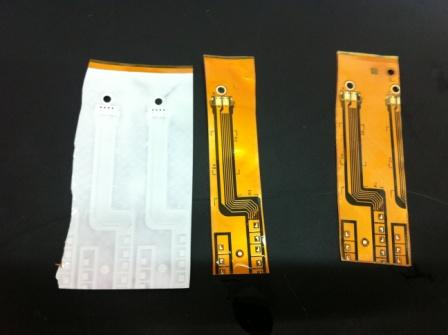
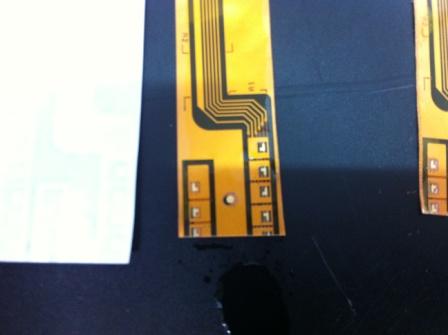
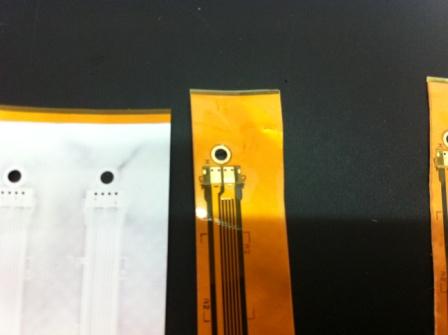
It is found that after the ACHM01-B agent is heated to 80°C, the ink stripping effect is more significant. One minute after the sample was put in, it was found that most of the ink had fallen off.
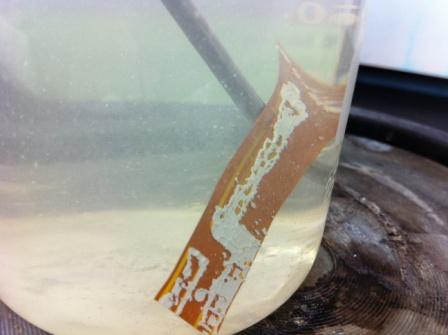
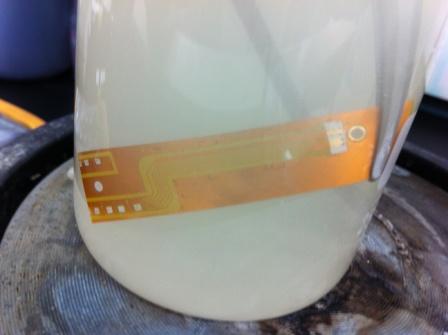
-
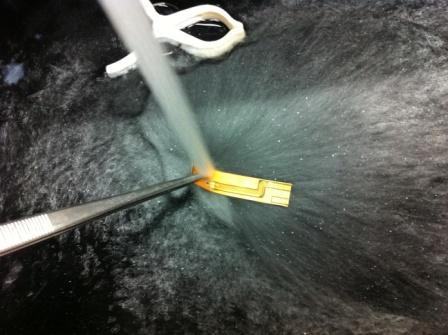
After the sample was put in for 3 minutes, it was taken out, rinsed with clean water, and it was found that the ink (heat-setting type) had completely fallen off.
-
Throw in another sample.
-
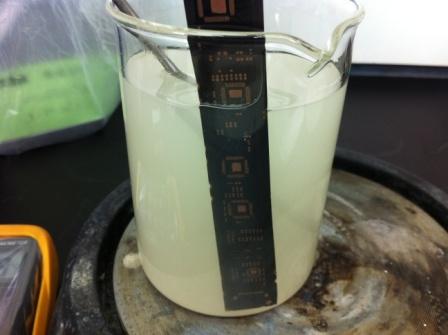
Heat it to 80°C with ACHM01-B agent, soak it for 5 minutes, shake it slightly, and find that most of the ink (UV hardening type) in the middle area has fallen off.
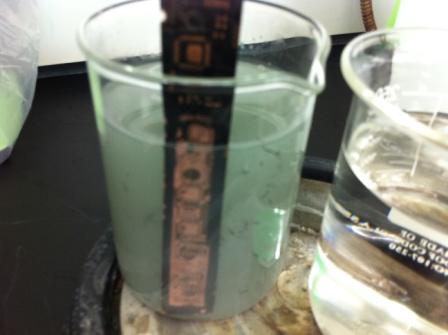
-
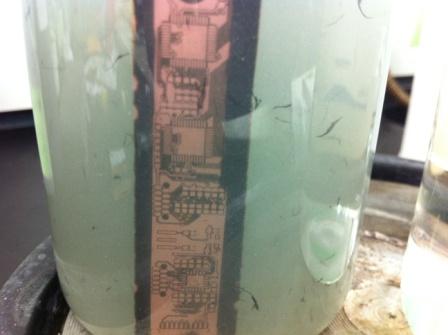
However, after cleaning for 10 minutes, it was found that most of the ink in the middle area had fallen off, and the frame ink did not fall off obviously.
-
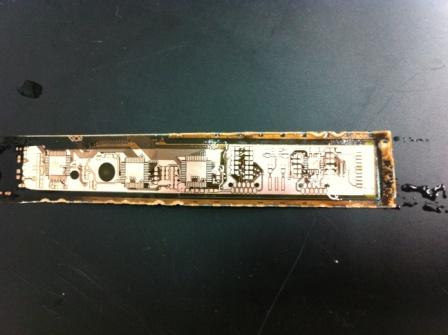
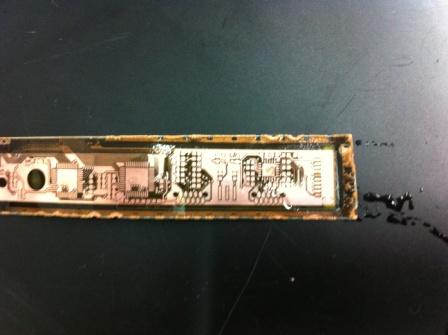
Prolong the cleaning to 15 minutes, take it out, and rinse it with clean water. It is found that although the border ink has been rinsed, the edge of the PCB board may be injured due to the penetration of the chemical.
-
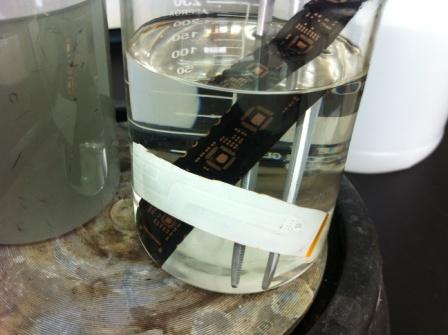
The replacement agent is ACHM01-H, and this ACHM01-H agent is also heated to 80°C. Put in the sample to be tested (UV curable type). At the same time, cut out a piece of soft board sample previously covered with white ink (heat-setting type), and put it in together.
-
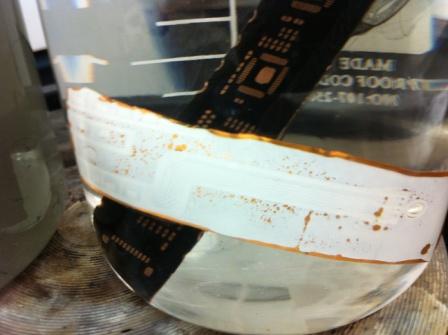
After soaking for 1 minute, it was found that a small part of the soft board sample (heat-setting type) covered with white ink had fallen off.
-
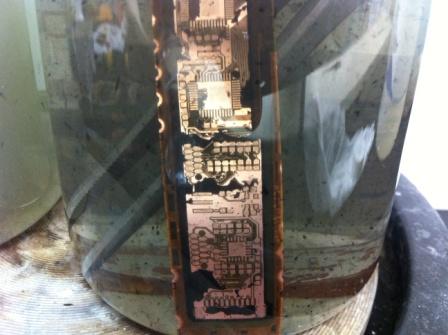
After soaking for 5 minutes, it was found that most of the soft board samples covered with black ink (UV hardening type) had fallen off.
-
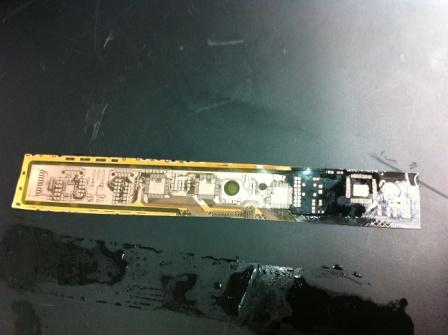
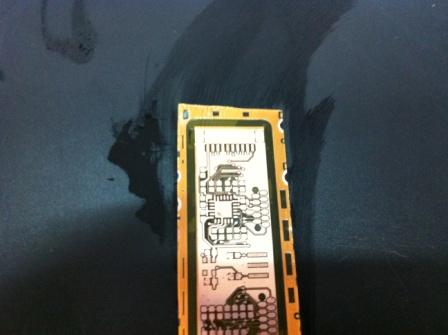
Take it out, rinse it with clean water, and find that the border ink (UV hardening type) has been completely rinsed, and the PCB board is in good condition, and the edge is not injured due to chemical penetration.
-
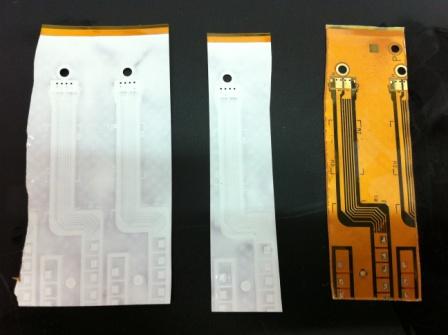
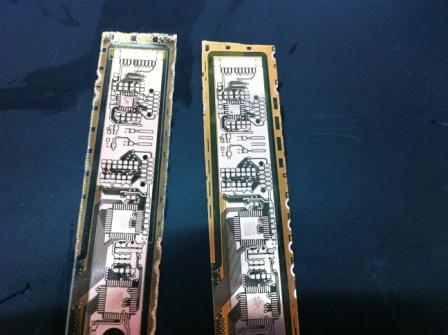
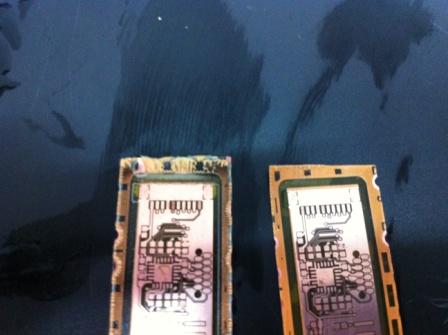
Comparing ACHM01-B and ACHM01-H, on the soft board samples covered with black ink (UV hardening type), the cleaning results are different: the soft board cleaned by SGC06A is brighter in color, and the edge is not damaged by chemical penetration. (The left side of the photo below is the cleaning result of ACHM01-B, and the right side is the cleaning result of ACHM01-H)
-
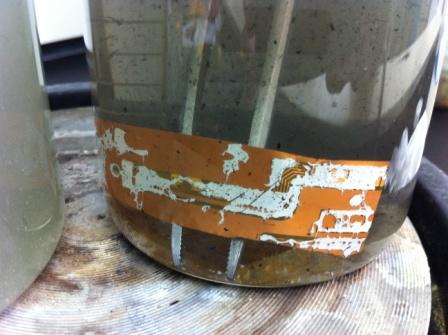
However, ACHM01-H is not good at cleaning soft boards covered with white ink (heat-setting type), and it cannot be removed after soaking for 10 minutes.
-
Take another soft board sample covered with yellow photosensitive ink, and put them into ACHM01-B and ACHM01-H respectively.

-
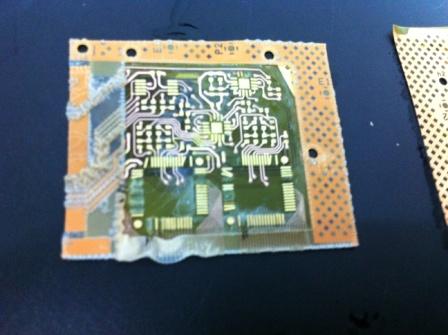
It was found that the cleaned samples of ACHM01-B were damaged.
-
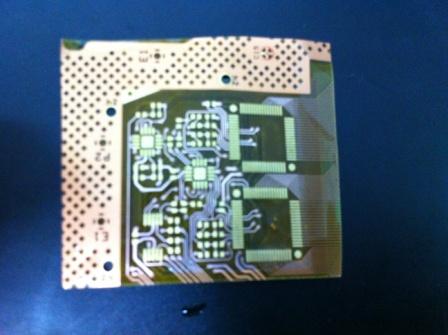
The sample cleaned with ACHM01-H was quite clean, and the soft board was in good condition.
-
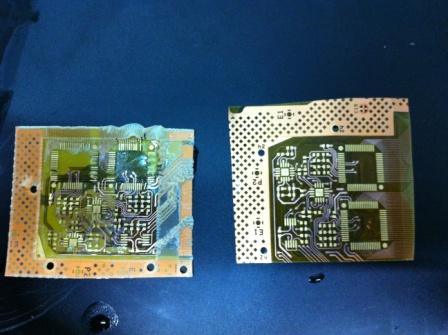
Differences in cleaning results: The color of the soft board cleaned by ACHM01-H is brighter, and the edges are not injured by the penetration of chemicals. (The left side of the photo below is the cleaning result of ACHM01-B, and the right side is the cleaning result of ACHM01-H)
-
Conclusion: The results of this sample test: ACHM01-H has a more significant effect on the removal of UV hardening ink.
ACHM01-B has a better removal effect on thermosetting ink.