

EVER DEPENDUP CO., LTD
3F., No. 32, Keya Rd., Central Taiwan Science Park, Daya Dist., Taichung City 42881, Taiwan
TEL: +886-4-25600139 FAX: +886-4-25600149
1. Starch Residue Detection Method
1-1. Purpose: To check if tableware or food containers are clean and free of starch residue.

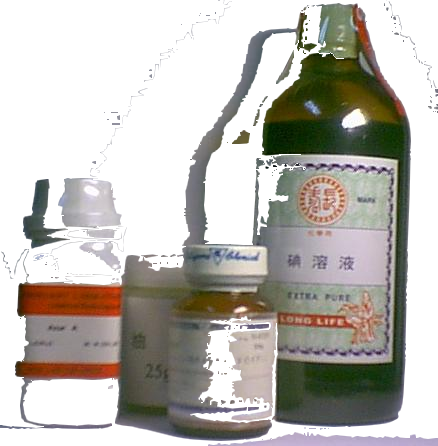
1-2. Reagent:
1-3. Inspection Method:
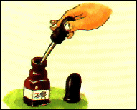
1. Take starch test solution
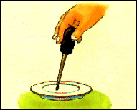
2. Drip onto the tableware or container to be tested
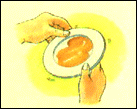
3. Rotate slowly to cover the entire surface with solution
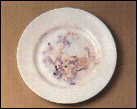
4. Starch residue will turn blue-purple
1-4. Suggestion:
1. Determination of starch residue is based on whether there are distinct blue-purple spots or streaks on the plate. Slight brownish-yellow or extremely faint blue tints should not be judged as starch residue.
2. Fat Residue Detection Method
2-1. Purpose: To check for oil/fat residue on tableware or food containers to determine if they are clean.
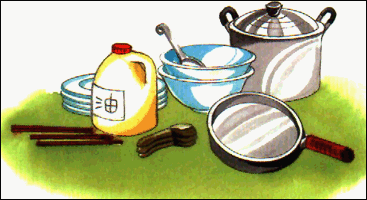
2-2. Reagent:
2-3. Inspection Method:
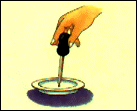
1. Drip the solution onto the item to be tested
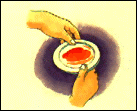
2. Rotate slowly to cover the entire surface
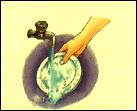
3. Rinse gently with water
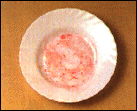
4. Fat residue will appear as orange-brown spots (Note)
Note: Determination is based on spots. If plastic containers are stained with an orange background that cannot be removed by water after testing, medicinal alcohol can be used to restore the original state.
2-4. Suggestion:
1. Determination of fat residue is based on distinct orange-brown oil spots or clear orange-brown streaks. Slight orange-brown tints should not be judged as fat residue.
3. Protein Residue Detection Method

3-1. Ninhydrin Test Solution (ninhydrin T.S.)
Dissolve 0.2g of ninhydrin in 95% alcohol to make a total volume of 100ml. This product should be prepared just before use. If using a pre-configured Ninhydrin solution, it should be stored refrigerated at 0~5°C, and tested every month on a standard sample to ensure the reagent still colors effectively.
3-2. Test Method:
Spray Ninhydrin test solution onto the tableware, then place it in a 100°C oven for 3~5 minutes. If blue-purple residue is found, it indicates protein residue on the tableware.
3-3. Note: