
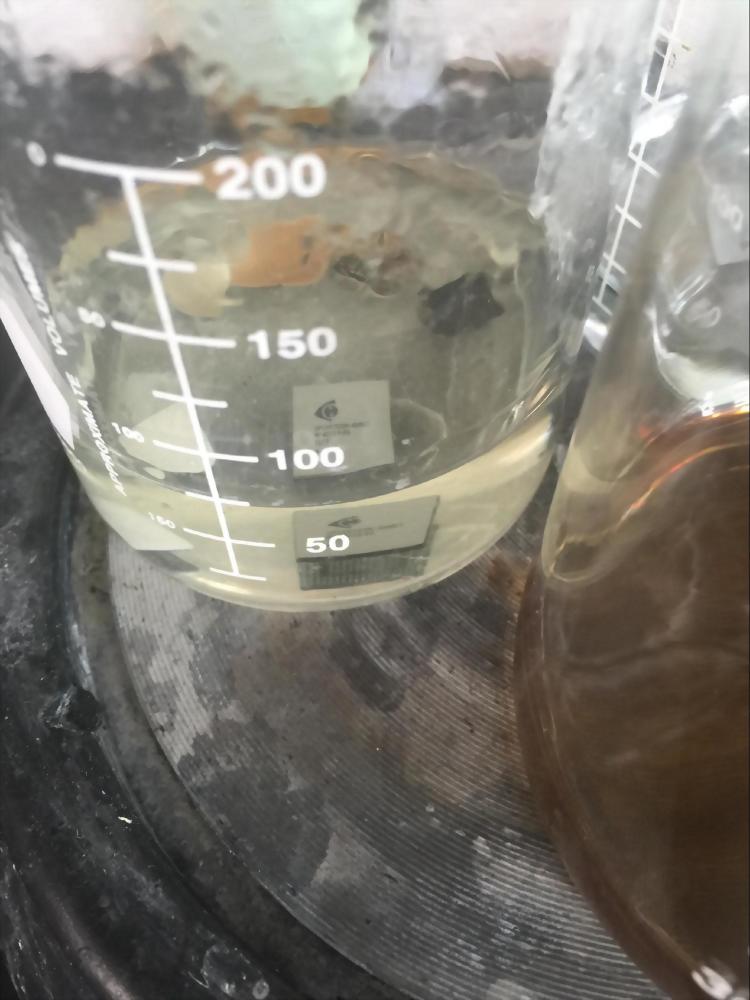
• Hardened Ink Cleaner

Hardened Ink Cleaner

Model : ACHM04-A Plus

Xiwei TM Hardening Ink Cleaner ACHM04-Aplus is applied to OLED Driver chip to remove ACF residual glue in gold bump gap test report

  1. before cleaning
    Before the ACF residue is removed.
    The purpose of this test is to heat and soak the agent, without wiping or scraping, to effectively remove the residual ACF anisotropic conductive adhesive.

    01.png

    02.png

    03.png

    04.png

  2. Heat the agent to about (70°C), put it into the Driver IC, soak ACHM04-Aplus for 10 minutes, and find that most of the ACF residue has been removed.

    05.png

    06.png

    07.png

    08.png

  3. Increase soaking temperature. Heat the agent to about (100°C), put it into the Driver IC, soak ACHM04-Aplus for 10 minutes, and find that most of the ACF residue has been removed.

  4. in conclusion:

    ACHM04-Aplus can remove residual ACF anisotropic conductive adhesive.
    It is recommended to soak the entire workpiece in a 60~80°C chemical and clean it with ultrasonic vibration.


Xiwei TM Hardening Ink Cleaner ACHM04-Aplus is applied to OLED Driver chip to remove ACF residual glue in gold bump gap test report

  1. before cleaning
    Before the ACF residue is removed.
    The purpose of this test is to heat and soak the agent, without wiping or scraping, to effectively remove the residual ACF anisotropic conductive adhesive.

    09.png

    10.png

    11.png

    12.png

  2. Heat the agent to about (70°C), put it into the Driver IC, soak ACHM04-Aplus for 10 minutes, and find that most of the ACF residue has been removed.

    13.png

    14.png

    15.png

    16.png

  3. Increase soaking temperature. Heat the agent to about (100°C), put it into the Driver IC, soak ACHM04-Aplus for 10 minutes, and find that most of the ACF residue has been removed.

  4. in conclusion:

    ACHM04-Aplus can remove residual ACF anisotropic conductive adhesive.
    It is recommended to soak the entire workpiece in a 60~80°C chemical and clean it with ultrasonic vibration.

Xiwei TM Hardening Ink Cleaner ACHM04-A Applied to Chip Fuse (Chip fuse) EPOXY Sealant Removal Test Report

  1. before cleaning
    Chip type fuse appearance, front and back.

    17.jpg

    18.jpg

  2. Soak in ACHM04-A cleaning agent at 110°C for 10 minutes, and after shaking slightly, it is found that the black EPOXY sealant has come off.

    19.jpg

    20.jpg

  3. Take it out and observe it with a microscope, you can clearly see the internal circuit.

    21.jpg

    22.jpg

    23.jpg

    24.jpg

    25.jpg

    26.jpg


Xiwei TM Hardening Ink Cleaner ACHM04-A Applied to Metal Chip Surface Hardening Ink Removal Test Report

  1. before cleaning
    The appearance of the metal wafer, the left side of the photo below is the back side, and the right side is the front side. The white (metallic) part of the front is a metal plate (probably aluminum) with black ink printed on top. The purpose of this test is to remove this black hardened ink, but metal and PCB laminates, green solder resist paint, metal feet, etc., cannot be injured.

    27.jpg

  2. Tested with different agents. Soaking ACHM04-H1 was found to have no effect. However, after soaking in ACHM04-A cleaning agent at 130°C for 10 minutes, it was found that the black hardened ink on the front had been slightly detached.

    28.jpg

    29.jpg

    30.jpg

    31.jpg

  3. Gently touch the softened black ink with a soft nylon tube, and it can be easily wiped off.

    32.jpg

    33.jpg

  4. Take it out and rinse it with clean water. It was found that neither the front nor the back of the wafer was damaged. The metal plate was also undamaged.

    34.jpg

    35.jpg


Xiwei TM hardening ink cleaning agent ACHM04A applied to PCB board EPOXY hardening glue removal test report

  1. before cleaning

    36.png

  2. After soaking in ACHM04A cleaning agent at 200°C for 30 minutes, take it out.

    37.png

  3. Then use a fine needle to remove the softened and residual black glue.

    38.png

    Results and discussion:

    1. First frame the IC to be glued with a fence, then soak the PE/PP wax to seal the rest, then use ACHM04-A to remove the black glue on the IC, and finally heat it again to dissolve and remove the PE/PP wax.

    2. ACHM04-A has a gel formulation: ACHM04-AG, which can limit the range of gel removal. The method of use is to put the gel on the vinyl, and then bake it in the oven (room temperature is also possible, but the speed is slower). After a period of time, the softened part of the vinyl surface can be scraped off. Because the gel is less fluid, it may be necessary to remove the gel several times.

    3. The last remaining glue on the IC, because it has softened, can be removed with a high-pressure water jet. Or put the medicament in a closed chamber and spray the IC with high pressure.


Xiwei TMACHM04-A hardening ink cleaning agent applied to MicroSD mold hardening ink removal test report

  1. Before cleaning, the appearance of the MicroSD mold can clearly see the residue of hardened ink.

    39.jpg

  2. Use ACHM04-A hardening ink cleaning agent, heat to 80~90℃, soak for 60 minutes.

    40.jpg

  3. After soaking for 60 minutes, brush lightly with a barbecue brush. It was found that most of the residual hardened ink could be easily brushed off.

    41.jpg

    42.jpg

  4. But a small amount of hardened ink remains on the corners of the mold.

    43.jpg

  5. It can be removed with a hard PE plastic tube.

    44.jpg

  6. It can also be removed with a copper brush or a metal brush with a hardness lower than that of the aluminum mold. As long as it is a material that does not cause scratches on the aluminum mold, it is fine.

    45.jpg

  7. It can also be sprayed with high-pressure air (7Kg/cm2).

    46.jpg

  8. The removed hardened ink can be collected with a filter.

    47.jpg

  9. Suggestions and discussions:


Xiwei TMACHM04-A Hardening Ink Cleaner Applied to EPOXY Die Packaging Resin Removal Test Report

  1. Before cleaning, the surface of the workpiece is cleaned.

    48.jpg

    49.jpg

  2. Use ACHM04-A to harden ink cleaning agent and soak at 80~90℃.

    50.jpg

    51.jpg

    Soak for 2 minutes.

    52.jpg

    53.jpg

  3. Soak for 5 minutes. After taking it out, wash it with clean water. EPOXY resin has been stripped.

    54.jpg

    55.jpg

    56.jpg

  4. Suggestions and discussions:


Xiwei TM hardening ink cleaning agent ACHM04A applied to EPOXY adhesive (after hardening agent mixing and hardening) removal test report

  1. before cleaning
    The aluminum rods are bonded with AB epoxy glue. The curing time after lamination is more than 72 hours.

    57.jpg

  2. Soak in AHLR03, AHLR05, ACHM04A cleaning agents at 120°C for 20 minutes, then take them out.

    58.jpg

  3. It is found that the epoxy hardened glue soaked in ACHM04A has the best removal effect.

    59.jpg

  4. Soak ACHM04A at room temperature for 24 hours, and found that the epoxy hardened glue can also be peeled off without energy consumption.

    60.jpg

  5. After soaking, it can be easily peeled off with a razor blade.

    61.jpg

    62.jpg

    63.jpg

    64.jpg

  6. Results and discussion:

    Since the two materials are bonded together, only the line of the cross-section can be used for chemical intrusion. If the adhesive depth on either side of the bonding surface is more than 10mm, it is recommended to exchange time for the purpose of peeling off the whole piece.
    6.1 The workpiece can be soaked in the medicine first. After about 1 hour, there should be 0.5~3mm glue swelling and soft rot along the edge of the seam where the two materials are bonded together.
    6.2 Take out the workpiece, insert an expander (triangular plastic sheet or a row of needles) into this slit, place the expander under the workpiece, and continue to soak in the medicine.
    6.3 Using the weight of the workpiece itself, as the internal UV glue gradually decomposes, the expander will gradually penetrate into the interior of the workpiece, and spread the two materials that are bonded together, allowing more agents to enter the interior.
    6.4 After about 24 to 72 hours, the joints of the workpieces can be separated.