-
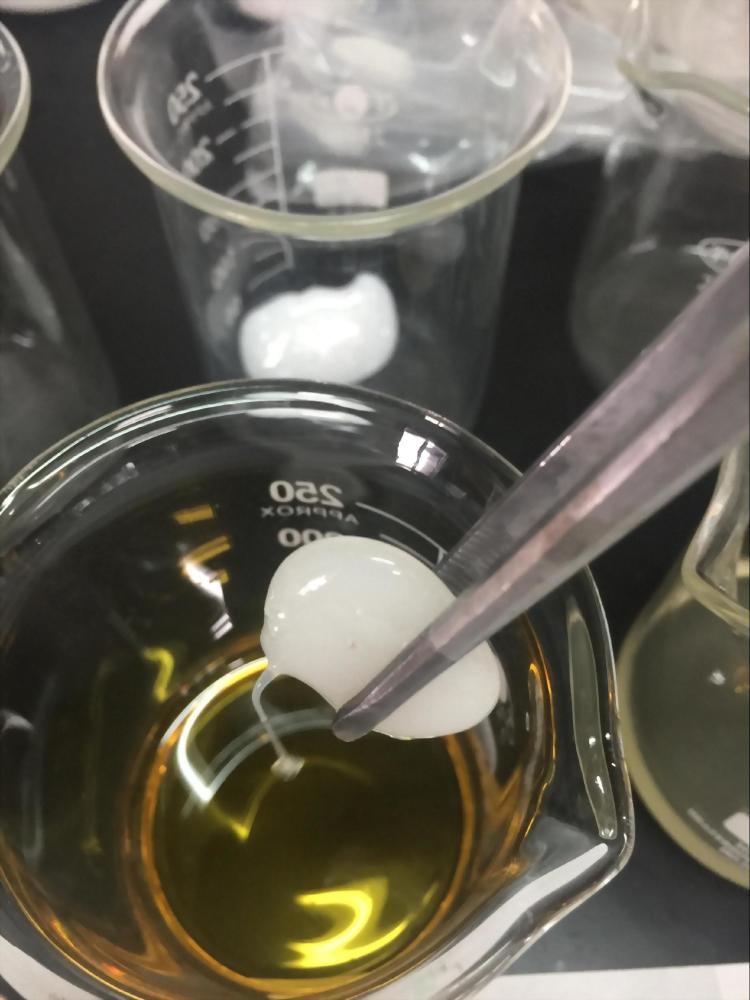
Appearance of test workpiece: white PU glue. The customer said that it is specially used for metal adhesive and PU adhesive.
The purpose of this test is to find the most suitable adhesive remover, which can effectively remove the PU adhesive. -
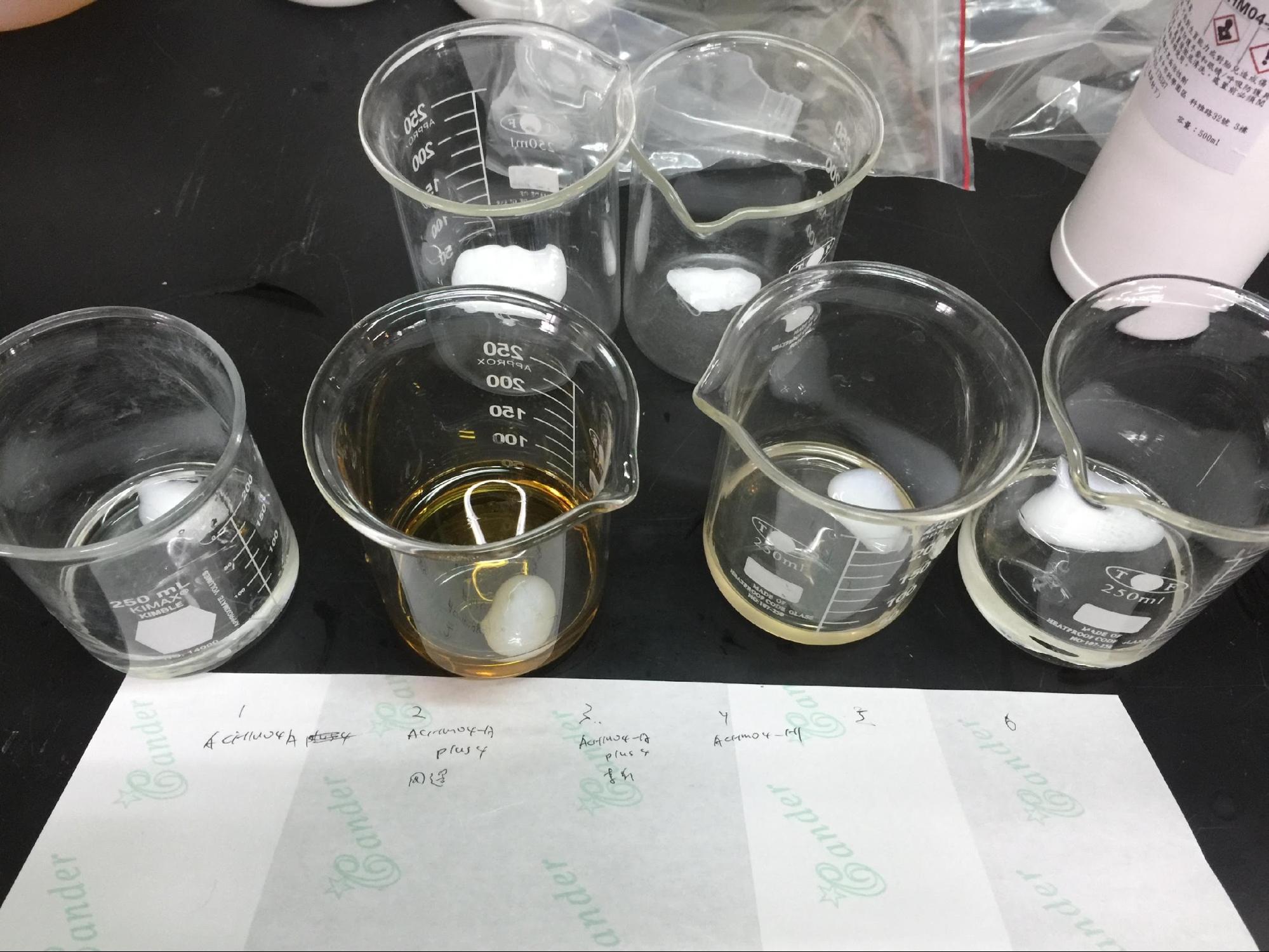
Considering that the customer said that this PU glue is mainly used to stick metal, if the metal material is aluminum or magnesium alloy, acid or alkaline glue remover will cause corrosion to aluminum and magnesium alloy. Therefore, in this test, the PU glue sent by the customer was soaked in 4 kinds of neutral glue removers.
-
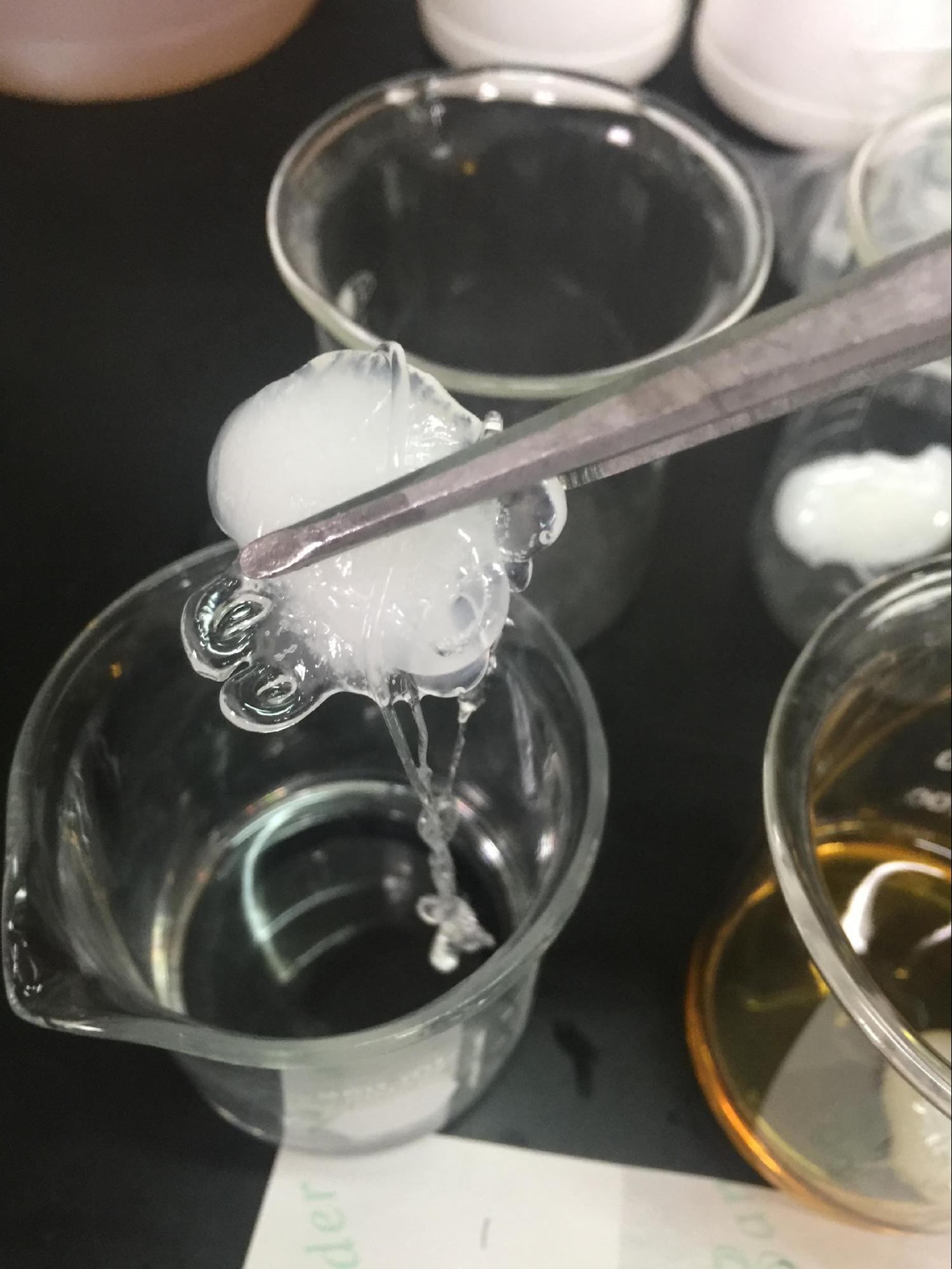
After soaking overnight (about 18 hours) at room temperature (20°C), it was found that No. 1 PU adhesive became transparent, but it was still elastic to the touch and not soft.
-
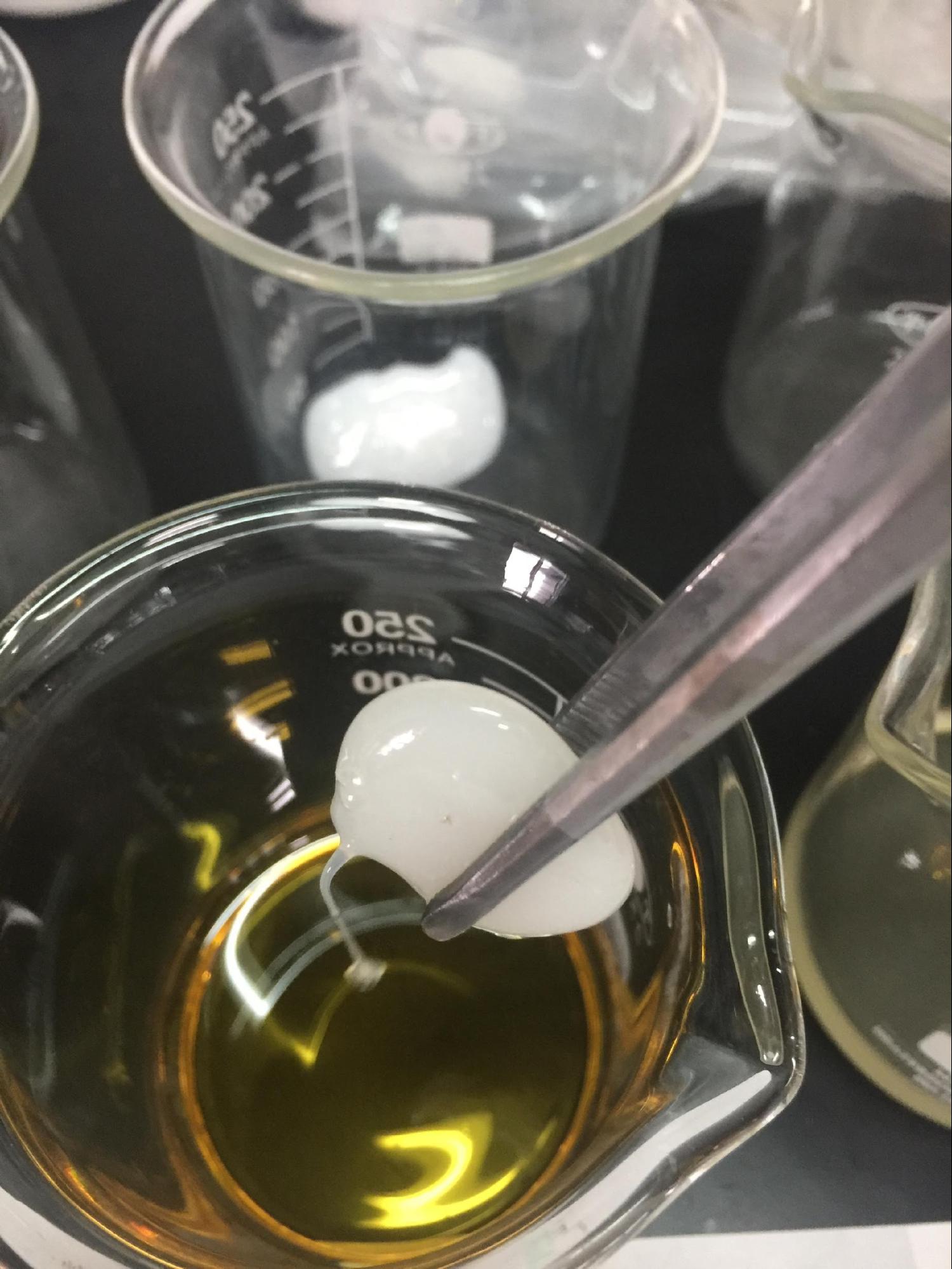
After soaking overnight (about 18 hours) at room temperature (20°C), it was found that the hard block of the No. 2 PU rubber body was still elastic to the touch, and it was not soft.
-
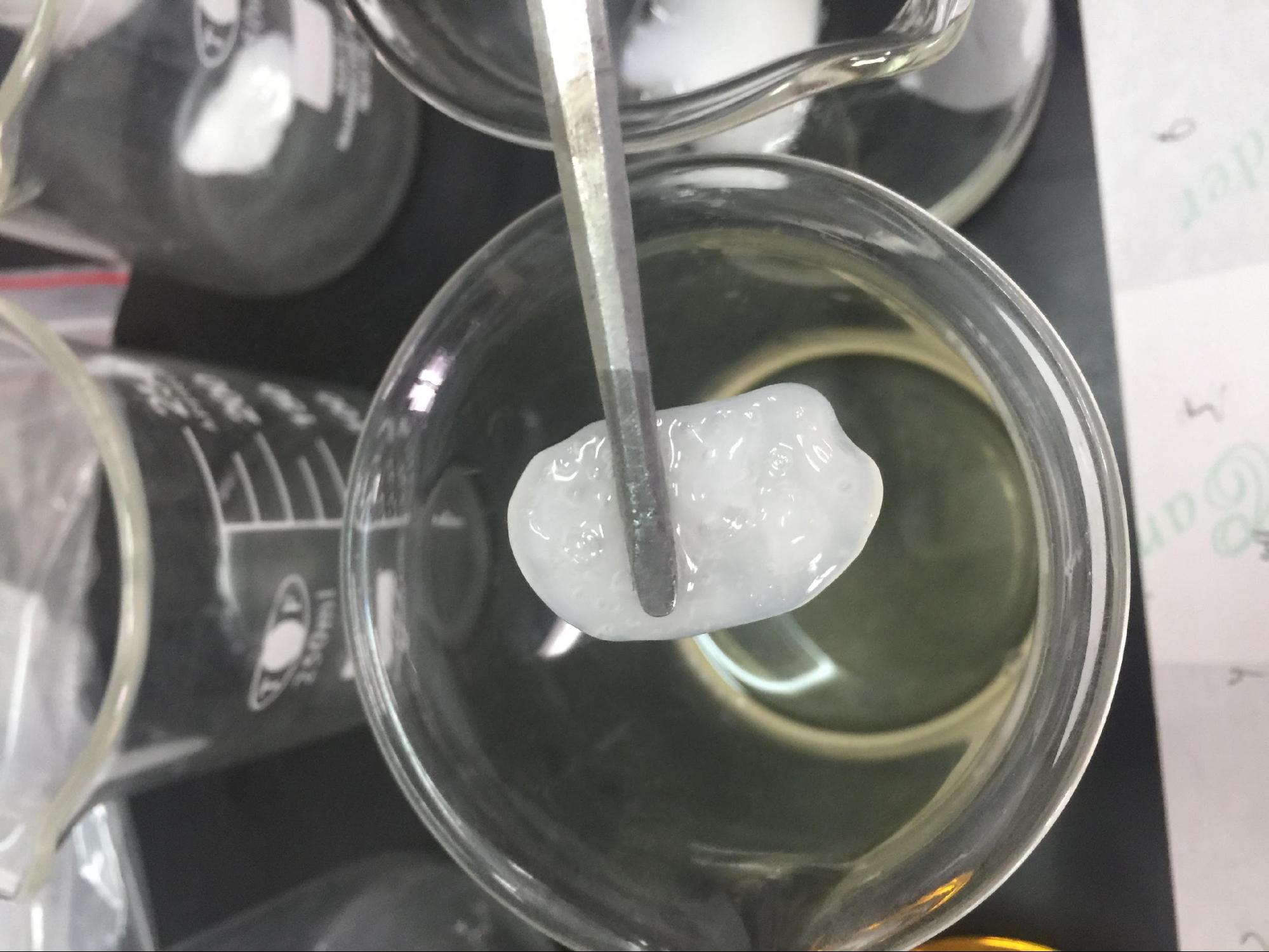
After soaking overnight (about 18 hours) at room temperature (20°C), it was found that No. 3 PU glue (soaked in ACHM04-A plus4), the filamentous part has been dissolved, and the surface of the hard block of the main body has been soft and rotten. When touched with tweezers, it forms a snot-like .
-
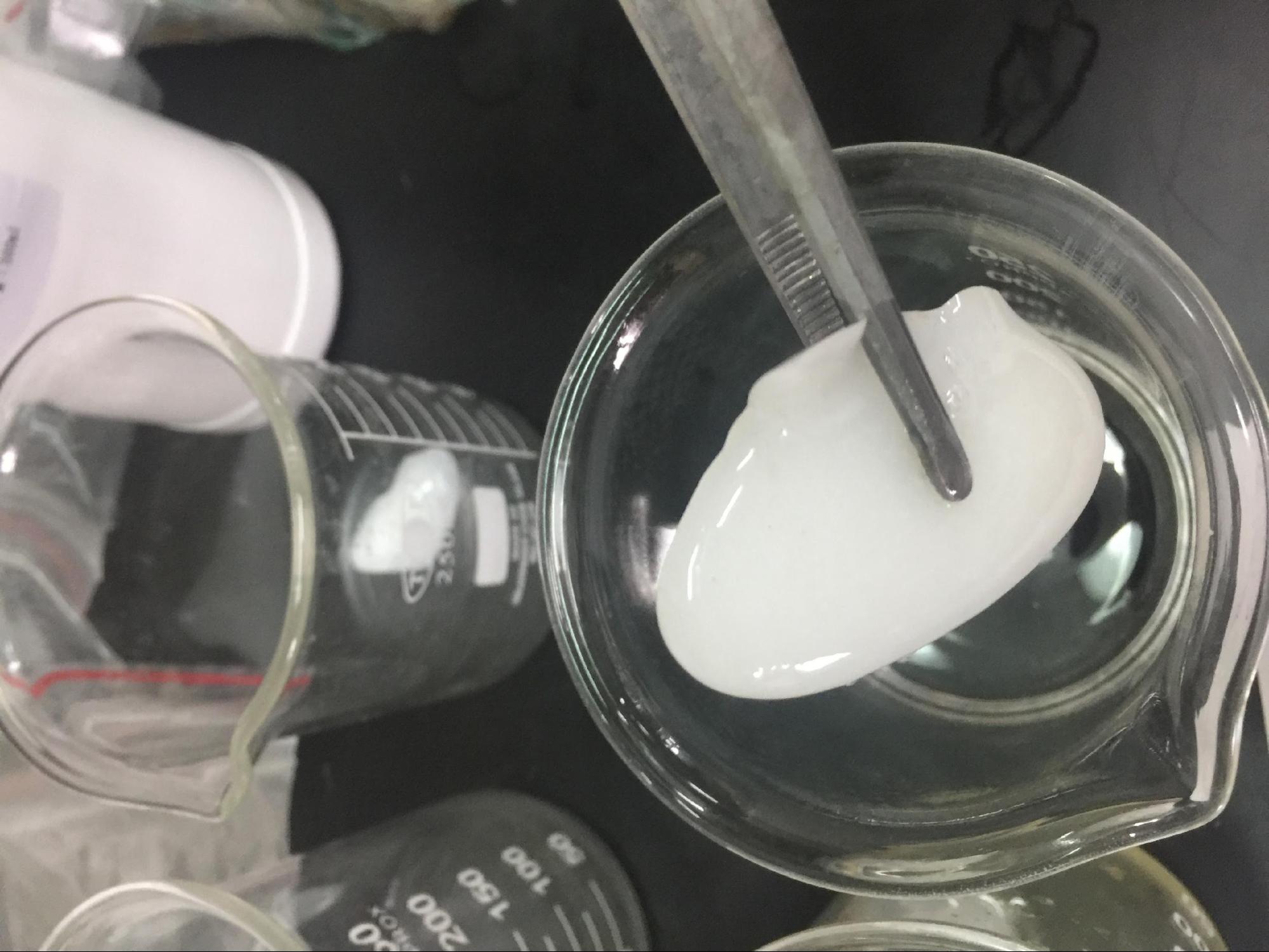
After soaking overnight (about 18 hours) at room temperature (20°C), it was found that the No. 4 PU glue had dissolved in the filamentary part, but the hard block of the main body was still elastic to the touch and not soft.
-
in conclusion:
7.1 It is found that the hardened ink remover ACHM04-Aplus4 (the No. 3 PU glue in the test) is the glue remover with the best sol effect among the four glue removers.
7.2 Use the hardening ink remover ACHM04-Aplus4 to peel off this PU glue, which should have the best effect.
7.3 Heat the agent to 80~100°C, inference should speed up the stripping efficiency.
7.4 It should be noted that if the workpieces are tightly fitted, if the PU glue cannot be exposed or comes into contact with the chemical, the peeling effect will be poor.