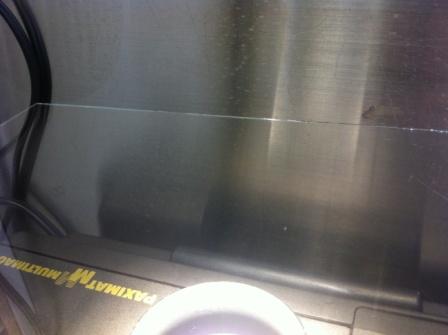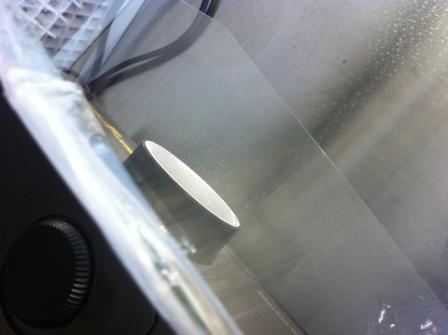
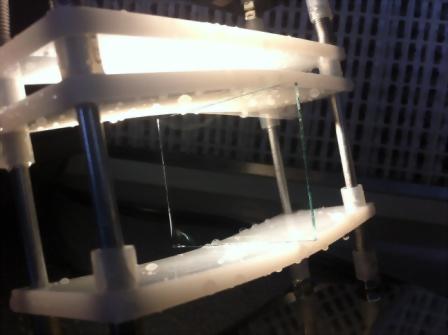
• Particle cleaner

Particle cleaner

Model : PTC04

PowerWashTM Particle cleaner PTC04 is applied to the white spot cleaning test report caused by the atomization of potassium spit on chemically strengthened glass

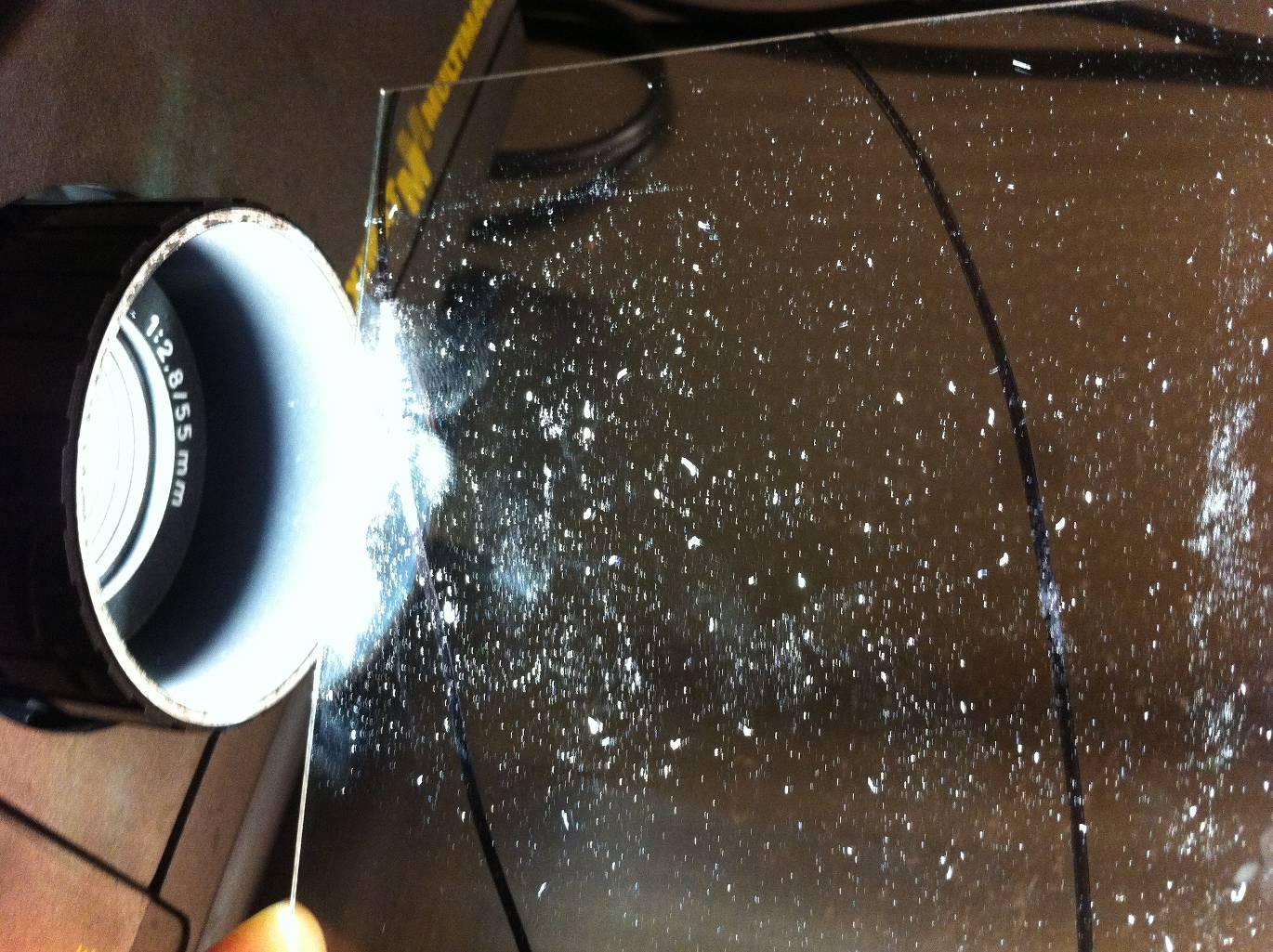
  1. Before cleaning, the white spots in the circle are not particularly clear because the surface is covered with particles.
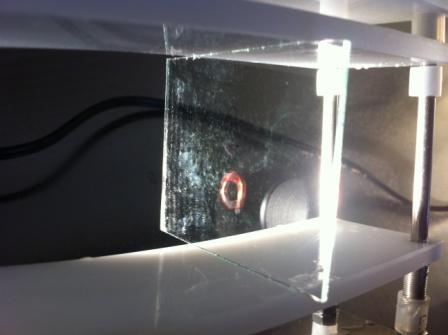
    01.jpg

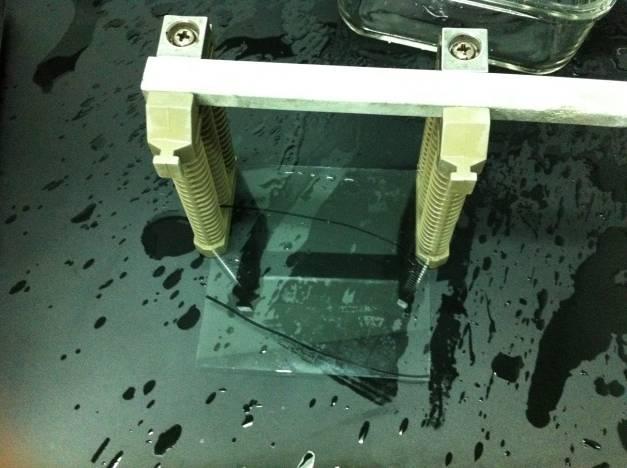
  2. Put it in the dust cleaning agent PTC04 (12%), heat it to 45°C, and clean it with 40KHz, 50W/2L ultrasonic wave for 5 minutes.
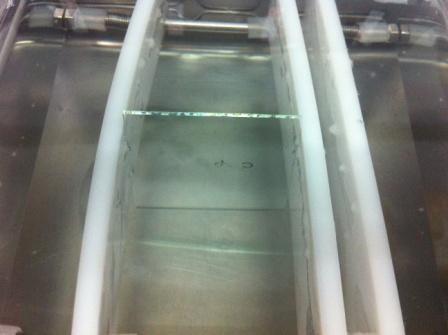
    02.jpg

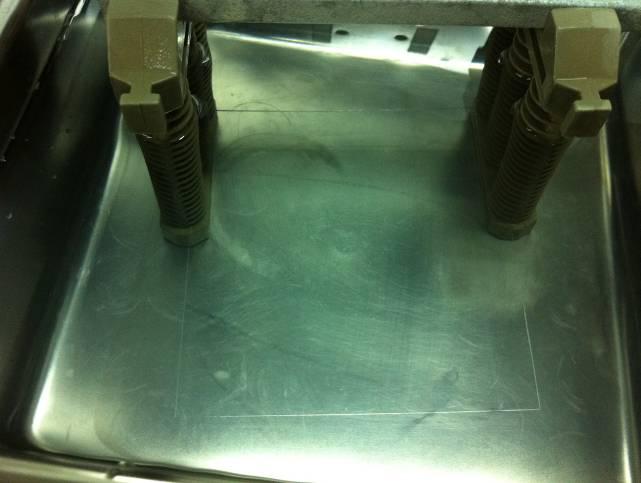
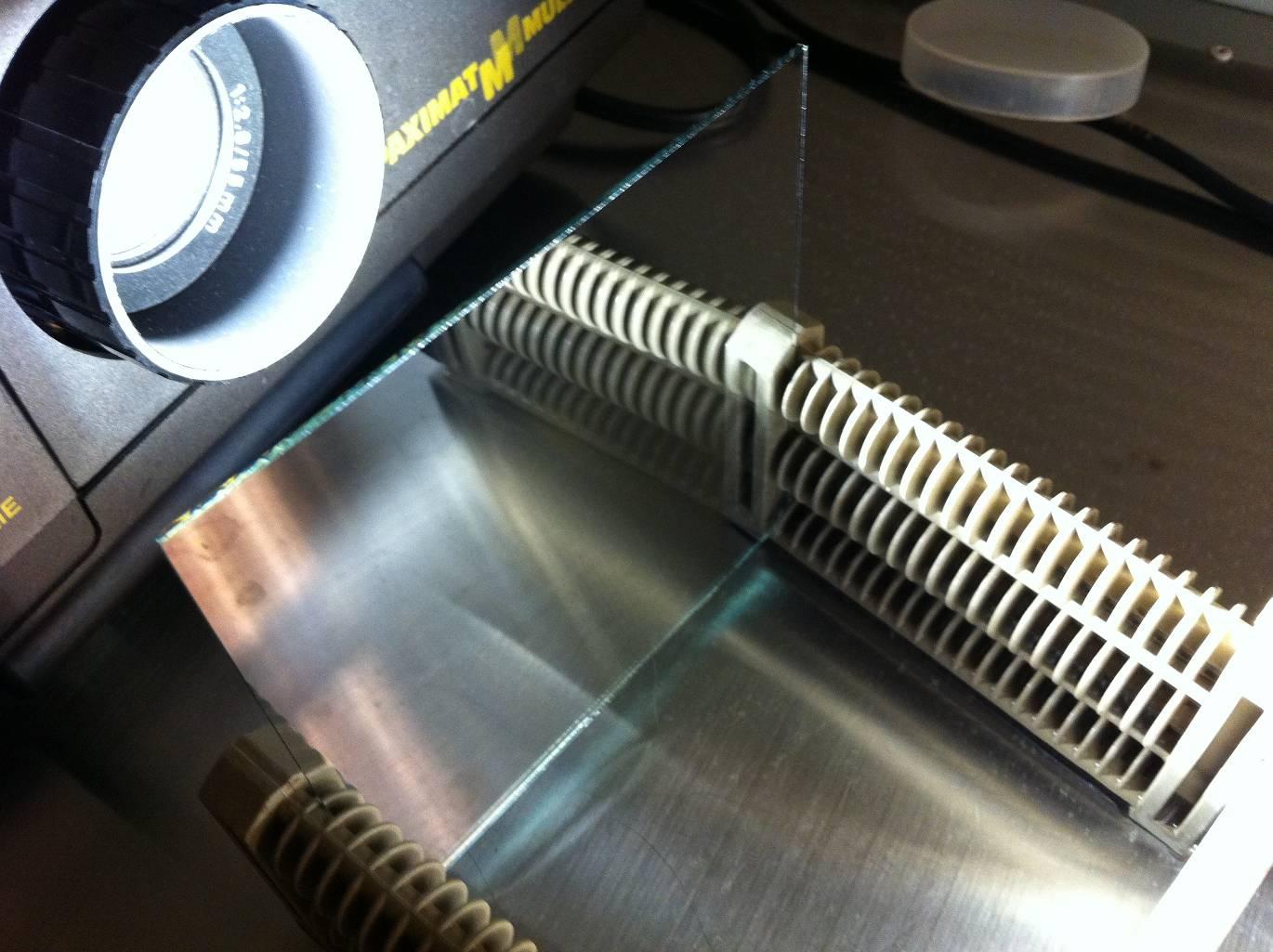
  3. Take it out and rinse it with pure water. In a dust-free dark room, observe with strong light. It is found that not only the particles that were originally covered on the surface no longer exist, but also the white spots caused by the atomization of potassium spit can not be seen. All cleaned up.

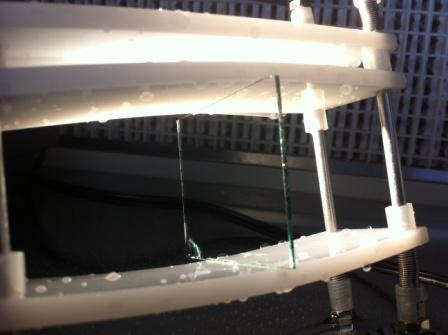
    03.jpg

    04.jpg

    05.jpg

  4. Suggestions and discussions:

    4.1 Microdust cleaner PTC04 can completely clean the particles covered on the glass surface and the atomized white spots caused by the glass just spit out potassium.
    4.2 PTC04 does not contain potassium ions. It is recommended that customers should soak 10% PTC04 at 40~60℃ for 10~30 minutes after soaking in potassium nitrate to strengthen it. So that the free potassium contained in the strengthened glass can be replaced in the bath, so as to avoid the white fog caused by the glass spit potassium in the future.
    4.3 PTC04 can generate a zeta potential greater than -36mv. Make the glass surface and the particle form an effective repulsive negative voltage. It can effectively remove grease and particle pollution on the glass. It is recommended that customers replace the original glass cleaner and use dust cleaner PTC04, which can meet the needs of glass immersion and cleaning at the same time.


Xiwei TM dust cleaning agent PTC04 applied to QH strengthened glass to remove water marks test report

1. Use microdust cleaner PTC04 (100%), heat to 45°C, and clean with 40KHz, 50W/2L ultrasonic wave for 5 minutes. Then rinse with pure water.
  1. Before cleaning, because the surface is covered with particles, the existence of residual water marks cannot be seen with the naked eye.

    06.jpg

  2. Put it in the dust cleaning agent PTC04 (100%), heat it to 45°C, and clean it with 40KHz, 50W/2L ultrasonic wave for 5 minutes.

    07.jpg

    08.jpg

  3. Take it out and rinse it with pure water. Under the clean room, observe with strong light. It was found that not only the particles that were covered on the surface no longer existed, but even [water marks] could not be seen. All cleaned up.

    09.jpg

  4. Rotate the glass and observe it from various angles. A faint scratch can be seen at certain angles, but it is judged not to be the original [water mark].

    10.jpg

  5. Use a dust-free cloth to wipe with the micro-dust cleaner PTC04, and then heat it to 45°C with PTC04 (100%), 40KHz, 50W/2L ultrasonic cleaning for 1 minute. It was found that it still couldn't be cleaned off, and it was still a scratch, not the [water mark] as originally described.

    11.jpg

  6. Repeat the test. Before cleaning, because the surface is covered with particles, the existence of residual water marks cannot be seen with the naked eye.

    12.jpg

  7. Put it in the dust cleaning agent PTC04 (100%), heat it to 45°C, and clean it with 40KHz, 50W/2L ultrasonic wave for 5 minutes. Take it out and rinse it with pure water. Under the clean room, observe with strong light. It was found that not only the particles that were covered on the surface no longer existed, but even [water marks] could not be seen. All cleaned up. This piece of glass does not have the [scratches] found on the previous piece of glass, it is completely cleaned. It proves that the dust cleaner PTC04 can completely clean the particles, fingerprints and [water marks] covered on the glass surface. All cleaned up.

    13.jpg

  8. Suggestions and discussions:

    8.1 Microdust cleaner PTC04 can completely clean particles, fingerprints and [water marks] covered on the glass surface.
    8.2 It is recommended that the customer replace the original glass cleaning agent and use the dust cleaning agent PTC04, which should effectively improve the problem of the original water mark residue.
    8.3PTC04 can generate a zeta potential greater than -36mv. Make the glass surface and the particle form an effective repulsive negative voltage. It can effectively remove grease and particle pollution on the glass.


Xiwei TM fine dust cleaning agent PTC04 is applied to the white fog cleaning test report caused by potassium nitrate drug residues in CD photoelectrochemical strong glass

  1. Before cleaning, because the surface is covered with particles, the white mist caused by potassium nitrate drug residues is not particularly clear.

    14.jpg

  2. Put it under the tap and rinse with pure water to wash away the dust on the surface. (Because the customer does not have ultrasonic cleaning equipment, the white mist must be removed by manual wiping; to avoid scratches when wiping, first wash away the dust with water.)

    15.jpg

  3. Then use a dust-free cloth to wipe the glass surface with the micro-dust cleaner PTC04.

    16.jpg

  4. Finally rinse off with pure water. Placed in a clean room to dry naturally. Observation with bright light. It is found that not only the particles that were originally covered on the surface no longer exist, but also the white spots caused by the atomization of potassium spit can not be seen. All cleaned up.

    17.jpg

  5. Repeat the test. 2nd tablet. Before washing. Some fogging phenomena are easy to remove, and some are not easy to remove. Repeat the test several times to confirm that this agent can effectively remove the white mist phenomenon caused by potassium nitrate drug residues.

    18.jpg

    19.jpg

  6. 2nd tablet. After cleaning.

    20.jpg

    21.jpg

  7. Repeat the test. 3rd slice. Before washing.

    22.jpg

    23.jpg

  8. 3rd slice. After cleaning.

    24.jpg

    25.jpg

  9. Repeat the test. 4th slice. Before washing.

    26.jpg

    27.jpg

  10. 4th slice. After cleaning.

    28.jpg

    29.jpg

  11. Repeat the test. 5th tablet. Before washing.

    30.jpg

  12. 5th tablet. After cleaning.
    The atomization phenomenon caused by drug residues in this piece of glass is relatively serious. After cleaning for the first time, carefully observe the glass, and you can see slight dot-like residues.

    31.jpg

  13. 5th tablet. Wipe again with PTC04.
    The punctiform fog band observed after the first cleaning becomes less obvious after the second cleaning. But turn the glass. Changing the angle of light irradiation, you can still see a slight white spot. (Photos are hard to take clearly)

    32.jpg

  14. 5th tablet. Wipe again with PTC07B.
    The punctiform fog zone observed after the first cleaning has almost disappeared after the third cleaning.

    33.jpg

    34.jpg

    35.jpg

  15. Suggestions and discussions:

    15.1 The dust cleaning agent PTC04 can completely clean the particles covered on the glass surface and the atomized white spots caused by the glass potassium nitrate drug residue.
    15.2 PTC04 does not contain potassium ions. It is recommended that customers should soak 10% PTC04 at 40~60℃ for 10~30 minutes after soaking in potassium nitrate to strengthen it. So that the free potassium contained in the strengthened glass can be replaced in the bath, so as to avoid the white fog caused by the glass spit potassium in the future.
    15.3 PTC04 can generate a zeta potential greater than -36mv. Make the glass surface and the particle form an effective repulsive negative voltage. It can effectively remove grease and particle pollution on the glass. It is recommended that customers replace the original glass cleaner and use dust cleaner PTC04, which can meet the needs of glass immersion and cleaning at the same time.